
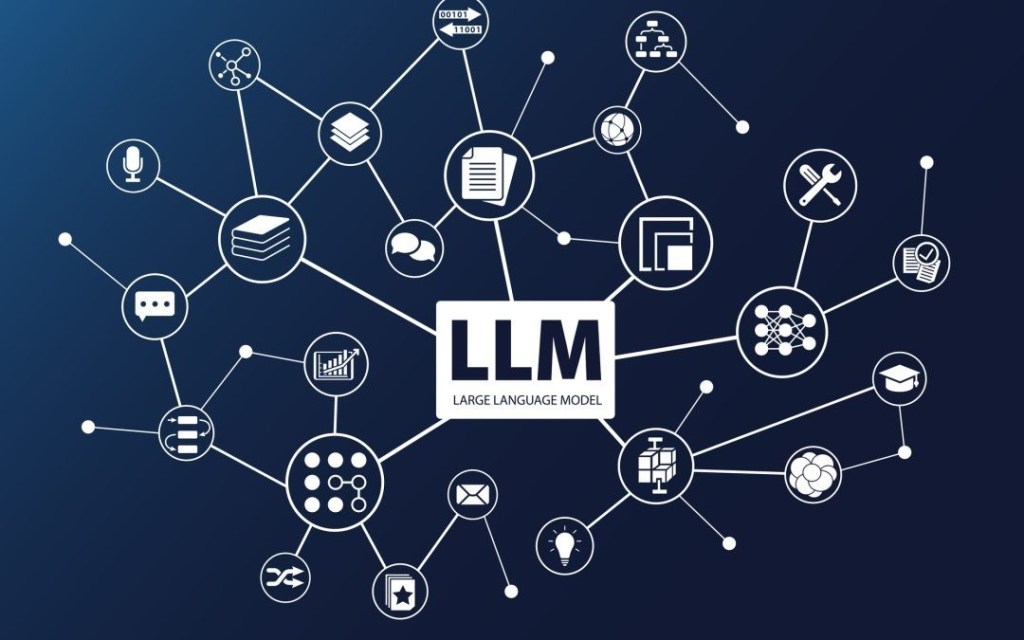
What are LLMs?
They are Large Language Models. LLMs are considered AI and understand context, nuance, intent and more to understand what you are really searching for, as opposed to keyword search engines that operate on algorithms based on pre-defined rules and pattern matching. They are trained using self-supervised learning based on large amounts of text. LLMs also used neural networks to understand the relationships between words and phrases in text. Essentially, LLMs can process entire sequences of text in parallel, which allows for faster training and production. LLMs can translate, generate and classify text, answer questions, identify data patters, perform sentiment analysis and perform speech recognition.
Why are LLMs important? What is it they really do?
If you’re like the rest of us, you’ve probably noticed that social media has taken turn after turn for the worst, progressively degrading into a mindless warp of useless content. LinkedIn, X (formally Twitter) and even Meta platforms have devolved into wastelands of memes, hate speech, cliches and scams. Where is the content relevant to our lives? Where is the personal connection to something that can actually better our lives? Social media has become what we all knew was the inevitable: a nightmare of engagement-obsessed feed of perpetual scrolling.
LLMs, on the other hand, will transform how we consume online content. The future of LLMs is still not completely certain, as it is still being tested and improved upon, but we hope it will lead us to a place where platforms will recognize your personal or professional trajectories, show you content tailored on where you are and where you want to be. Imagine not having to scroll endlessly or search tirelessly for what you are looking for, but having a feed that populates articles, discussions and stories tailored to what you need.
Imagine a new world of e-commerce, where instead of suggesting more products based on what others often purchase, product suggestions may consist of what will actually benefit you. Imagine consulting with an expert on what you need, rather than simply browsing.
Ok, so how do we use LLMs?
Chances are good that you’ve already been using LLMs in your daily life. When you use Google’s search engine, its LLM Gemini responds with a curated answer for you. LLMs are designed to serve you better than the traditional keyword matchmaker by predicting and carefully curating content that might add value to you.
Google is not the only one using and improving its LLM. Elon Musk has Grok as part of the Twitter/X platform, and Mark Zuckerberg has LLAMA as part of the Facebook/Meta platform.
Besides marketing, LLMs are also used in areas such as data science and law. LLMs can help data scientists ask questions and retrieve information more quickly, as well as help update knowledge in areas like intellectual property, corporate compliance and international trade. LLMs are also now being used in healthcare to predict cancer metastasis and to assist in devising clinical treatment responses.
Chat GPT is a prime example of a popular LLM. Many people use it commonly for help with organizing or summarizing information, helping with translations, analyzing or generating images, inspiring creativity and generally assisting with everyday tasks.
What does this mean for us moving forward?
There’s no way of telling where the LLM revolution is going to take us. European regulations, such as the AI Act, GDPR and DMA, can give us a glimpse into the future. These regulations are setting precedence on how we ethically build and use technology with transparency. Usually, when new technology launches and are met with new policies and regulations, it is not just the ones that respond to these new policies that flourish, but the ones that embrace them and use them to build to higher heights. We are hoping to see AI companies step up to the plate and accept the challenge to continue pursuing more possibilities.
Anything we should be looking out for within the LLM revolution?
While we hope for the former option, we are also a bit apprehensive of another possibility: a world formed by our own beliefs and opinions. Think of a vacuum of pure confirmation bias.
What is confirmation bias? It’s when your search of ‘do aliens exist?’ is met with hundreds and hundreds of results claiming that aliens, in fact, exist. Or when you search ‘is coffee bad for you?,’ you are met with hundreds and hundreds of people claiming that coffee is, indeed, bad for you. What these search results are missing is the other side of the argument.
It is entirely possible that LLM content curation will lead to a stream of results that will only show us what we already believe to be true. It will be lacking the other exploration and discovery of other people thoughts and beliefs that lead us to learn and grow. Take Spotify, for example. I’m sure we’ve all searched for our favorite artist and shuffled a playlist only to discover a new, similar artist in the same genre. We are crossing our fingers that LLMs won’t entirely shut us off to intellectual diversity and discovery and comes with a vacuum of pure confirmation bias.
While how we discover, consume and interact with content is changing, so is the advertising market changing. Traditional marketing strategist may have to learn to adapt and adjust to the new technology. Mass advertisements may become less effective as search results become more personalized. We can foresee, however, those who can learn to use LLMs to better understand and reach relevant audiences. Quantity will move to quality: it will become less about getting the ad in front of the masses, but about getting it in front of a smaller group of people who will actually benefit the most from the product or service.
The bigger question may be: how will we maintain and grow the element of human connection within this new technology that has escaped our content feeds and advertising in recent years?


Leave a reply to The Consideration Set as a Moving Target – The Fortexx Group Cancel reply